
 Dec 05, 2025
 3 min read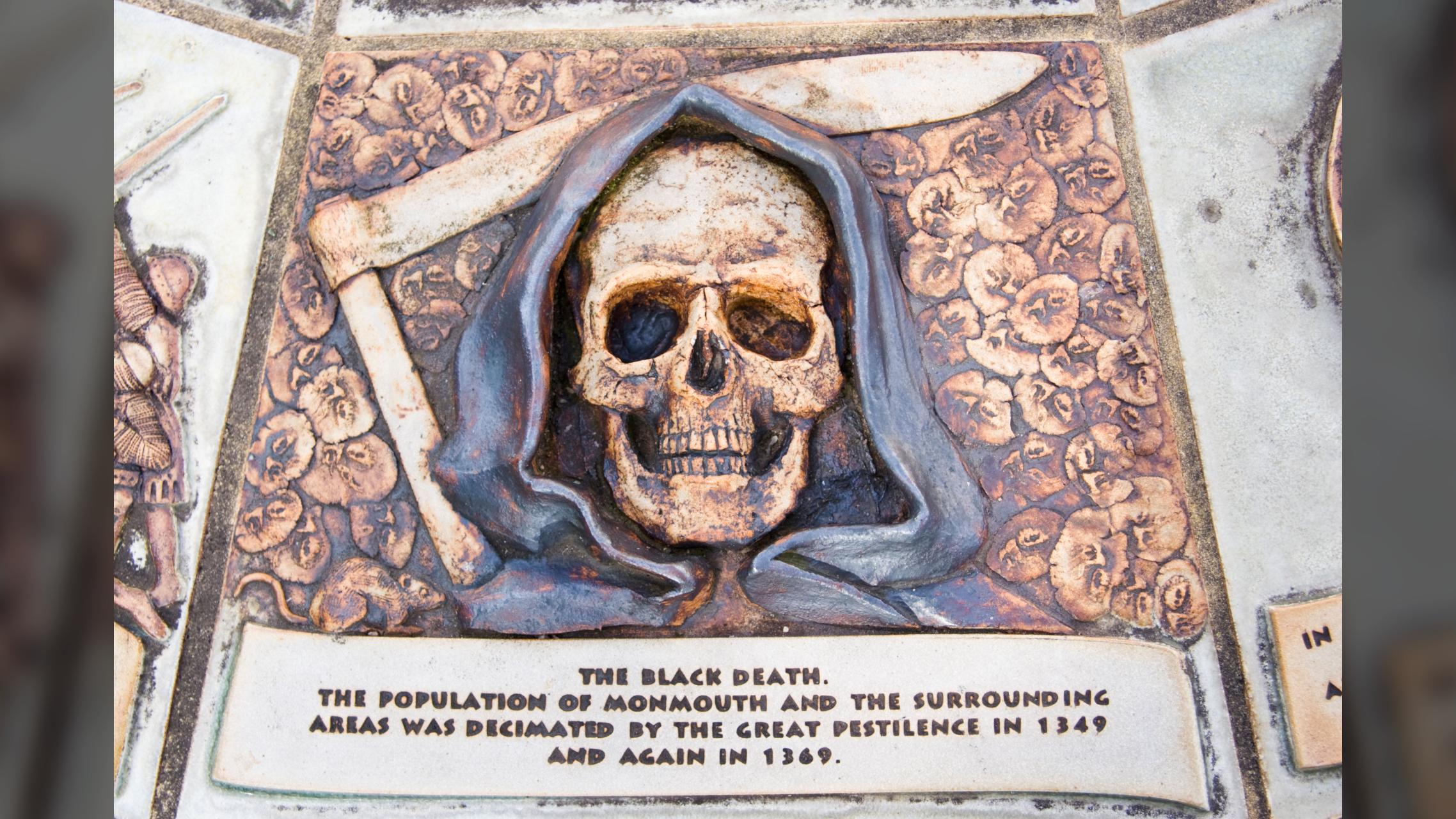
A volcanic eruption in 1345 may have set in motion a chain of events that led to the Black Death that swept through medieval Europe.
Volcanic eruptions cause 'butterfly effect' that kills others, researchers find
A volcanic eruption in 1345 may have started a series of events that led to the Black Death in medieval Europe.
The eruption of an unknown volcano in the mid-14th century may have been the basis for the spread of the Black Death in Europe.Triggering a cool and cloudy period in the Mediterranean, the eruption started a domino effect that led to a drop in agricultural production, requiring traders to import grain and the bacterium Yersinia pestis, which causes bubonic plague, into the Black Sea.
The bubonic plague pandemic, more commonly known as the Black Death, struck Europe in 1347 and quickly affected Italian port cities.The disease then spread throughout Europe over the next few years, killing 30 to 60% of the population.
Martin Mritt, a historian at the European Leibniz Institute in Germany, told Electronic Science that a very specific aspect of his Pandagen happened?"
To answer this question, Bauch and Ulf Büntgen, a geographer at the University of Cambridge, investigated climate-driven changes in the Mediterranean that could explain the sudden appearance of the Black Death in 1347.Their research was published Thursday (Dec. 4) in the journal Communications Earth & Environment.
Studying historical accounts of the time, researchers found reports of reduced sunlight, increased cloud cover, and dark lunar eclipses by independent observers in parts of Asia and Europe between 1345 and 1349. All of these astronomical and meteorological phenomena can be attributed to large amounts of known aerosols, as the Sun's reflection in the cold volcanic layer.
Paleoclimate data gives researchers in detail: the alarmingly high sulfur of thunder says:
"We can't talk about a volcanic eruption," Bach said.From the ice cores, we know that the eruption must have occurred in the tropics, because sulfate has been found in similar concentrations in Arctic and Antarctic ice.
Get the world's hottest discoveries straight to your inbox.
The researchers also looked at tree data from Europe and found that the summers of 1345, 1346 and 1347 were more than normal, leading to erosion and flooding.Historical records also confirmed that changes in the environment have reduced the yield of several crops, including the production of grapes and the production of corn in Italy, which require products to be produced.the importation of the Black Sea regions to prevent drought.
“Back in the second half of the second year of 1347 AD, Italian trade not only brought grain to Mediterranean ports, but the Yersinia bacterium most likely traveled through the grain on the long journey,” the researchers wrote in the study.
The first human cases of plague were reported in Venice just weeks after the last grain ships arrived."This started a typical cycle of infection," said Bauch. "The rodent population was infected first; when they died, the fleas passed on to other mammals and eventually to humans.
The introduction of wheat after many years of "times of changes in fish stocks that have turned into hostility in the Mediterranean, but also introduced the black death in Europe, the authors of the proposed study.
"This study by 1345 Vollano brings new information about why the black death," an independent scientist and black death expert who was not involved in the study, told Science in an email.
The Black Death outbreak was caused by a unique but fortuitous combination of short-term factors, such as the weather, and long-term factors, such as Italy's grain distribution system, the researchers wrote in the study.
Although the death of Black is the secret cause of environmental and social issues, but it is important to better understand the causes of past Pandemics. The researchers wrote this because "the probability of zoonotic diseases emerging and changing in a global and warming world."
Kristina Killgrove is a writer at Live Science. Her articles focus on archaeological news and paleoanthropology and have also appeared in Forbes, Smithsonian, and Mental Floss, among others.Christina has a PhD in Biological Anthropology and an MA in Classical Archeology from the University of North Carolina. Including a BA in Classical Archeology in Latin from the University of Virginia. And she has been a university professor and researcher.She has won awards from the Society for American Archeology and the American Anthropology Association for her scholarly writing.
You must confirm your screen name before commenting
Please log out and log back in and you will be asked to enter your display name.