 Oct 18, 2025
 3 min read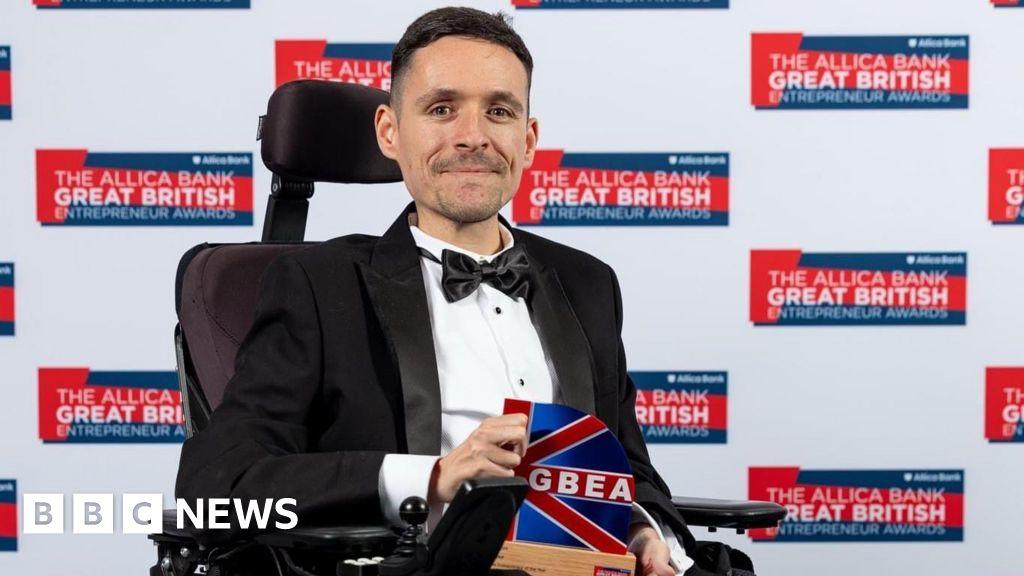
Many disabled workers face the threat of losing their jobs or businesses because they are waiting for fancy letters for government letters.
"I've built a successful business thanks to the disability grant, but the cuts will sink it"
Josh Wintersgill has been running a successful business selling products that help wheelchair users get around for six years, but the future of the business is still up in the air.
He uses the Government's Access to Work scheme to cover some of the extra costs of running his business, and fears he could lose that money if someone cuts support by 80%.
The Business Disability Forum (BDF) says businesses and their employees are disabled "despite the government's ambitions to place 80 percent of children with disabilities.
He said while reviewing all aspects of the Job and Sales Scheme (DAPP).
Josh needs physical support with many things related to his disability.This includes travel, travel itinerary, and packing and ordering from customers.Without this support, he says he would not have been able to escape from his company.
His entry into employment provided him with support staff five days a week, but following a reassessment, this was reduced to one day.
He said: "Actually, with me all the time. They help me a lot to help me do my job and without them, I don't have it."
Yaush has appealed the decision and has been without support since the beginning of July when he changed personally.
Under the Access to Work program, companies and employees can apply for grants to help people with disabilities in the workplace.
The program can pay employees and businesses for additional costs associated with a disabled worker – things that go beyond what employers are legally required to provide.It covers a range of things such as paying for taxis, assistive technology and British Sign Language interpreters.
People with disabilities have reported that their benefits have been drastically reduced, completely withdrawn, and in some cases they have been forced to close their businesses and refuse work.
Josh is currently using his own money to keep the business going, but says things are "really tough" and he will be able to do that in the coming months.
"I'm not doing everything I used to do," he said."There's so much to do that it's just so hard to stay on top of it ... it's just really frustrating."
Josh says that access to work has helped him get into work and start his own business, but he fears what will happen if it is taken away.
"It's scary to think that I'm a disabled businessman, helping people with disabilities and being able to get away with it."
- Disability programs owe companies thousands of dollars and create employment concerns
- 'I don't want to live on welfare.I want to work'
- Plans to help deal with 'Messy' recipients, say DWP officials
"We have a system that's making it very difficult for you to remain in work," he adds.
Access to group activists is designed for people to apply or re-apply for a grant.Its founder, Doc Shani Danda, said they had about 4,000 members as of July 4.
The group recently sent an open letter to the Prime Minister seeking "urgent" action to fix the "broken" system.
'Clarifying the value of our work'
Lunchtime at the Sea Change Cafe in Sunderland.The social enterprise employs 25 neurological adults and uses Access to Work to support most of them.
Lexi O'Connor has been at the cafe since it opened in 2019. Among the customers, she explains how working at the cafe gave her confidence, self-confidence and a sense of pride and now she trains others on how to work with different sensory groups and those with disabilities.
It took Lexi 10 months to reapply, and once that was done, her one-on-one support worker hours were significantly reduced, with the company filling the gap.
"Many employers at that time were physically unable to hire people like me," he said.
Lexie says she sees many of her colleagues worried about their job prospects because of problems accessing work.The cafe said it had already had to let two members of staff go because support had been cut.
"We are very concerned about this, it affects the quality of work that we have worked so hard to achieve in the first place.
“I feel like places like Sea Change are doing their best and they’re fighting for people like me.”
'Prepared to Reject'
Ministers have widely acknowledged Access to Work as a key driver in getting disabled people in work, but in an interview with the , minister for social security and disability, Sir Stephen Timms, said the problem was the "huge numbers of people wanting it", adding they had been struggling "to keep up with the demand".
Expenditure on the program has risen 41% in 2023-24 to 7 257.8 million.
In February 2025, 33,000 people are still waiting for DWP payments, with almost 62,000 applications pending.
The government's consultation on access to work closed at the end of June, and ministers are currently looking at what the new plan could look like.
Angela Matthews, Director of Public Policy and Research at the BDF called on the Government to make access to work "better and more resourceful".
He said: "Disabled people are set up to fail and so are employers, because disabled people don't need to work and employers don't have the tools or support to provide a workplace for disabled people."
BDF member Allianz UK says that despite the scale of its insurance business, it has not had problems with disputes and access to work.
Diana Salmon, the company's health and safety director, says the biggest problem is the long wait for awards to be processed.In some cases, people wait longer than 10 months to start working.
Diana says: “It [the star] can stop people from applying for us... So we do everything we can but we really can't afford to do big aid prices.
He also mentioned the recent case of a new hire who left the company after starting the role because of one year of technical equipment acquisition.
Diana said: "We want to provide an inclusive environment, but colleagues with complex disabilities can be left out if job funding is not provided in time."
Diana herself used Access to Work in a previous job.The money paid for travel expenses to visit her team in places she wouldn't otherwise be able to go, but she said she sees value in the program.
"It will be very difficult for us to attract and retain disabled staff [without a program," she said.
In a statement, the DVP said: "We inherited an access to work program that failed for both employees and employers. As part of our welfare reform, we therefore discussed how we could improve this project."
We are reviewing all aspects of this plan and will develop future policies for people with disabilities and the organizations that represent them.
"The action policy is not added to the invoice".